Up to 800 QSFP56 ports with 200GbE HDR InfiniBand
320 Tb/s total bidirectional bandwidth
Ultra-low latency for HPC & AI workloads
Compact 29U rack-mount design
NVIDIA SHARP™ in-network computing support
Redundant power & advanced cooling system
Simplified management with NVIDIA Quantum Suite
Enterprise-grade reliability and uptime
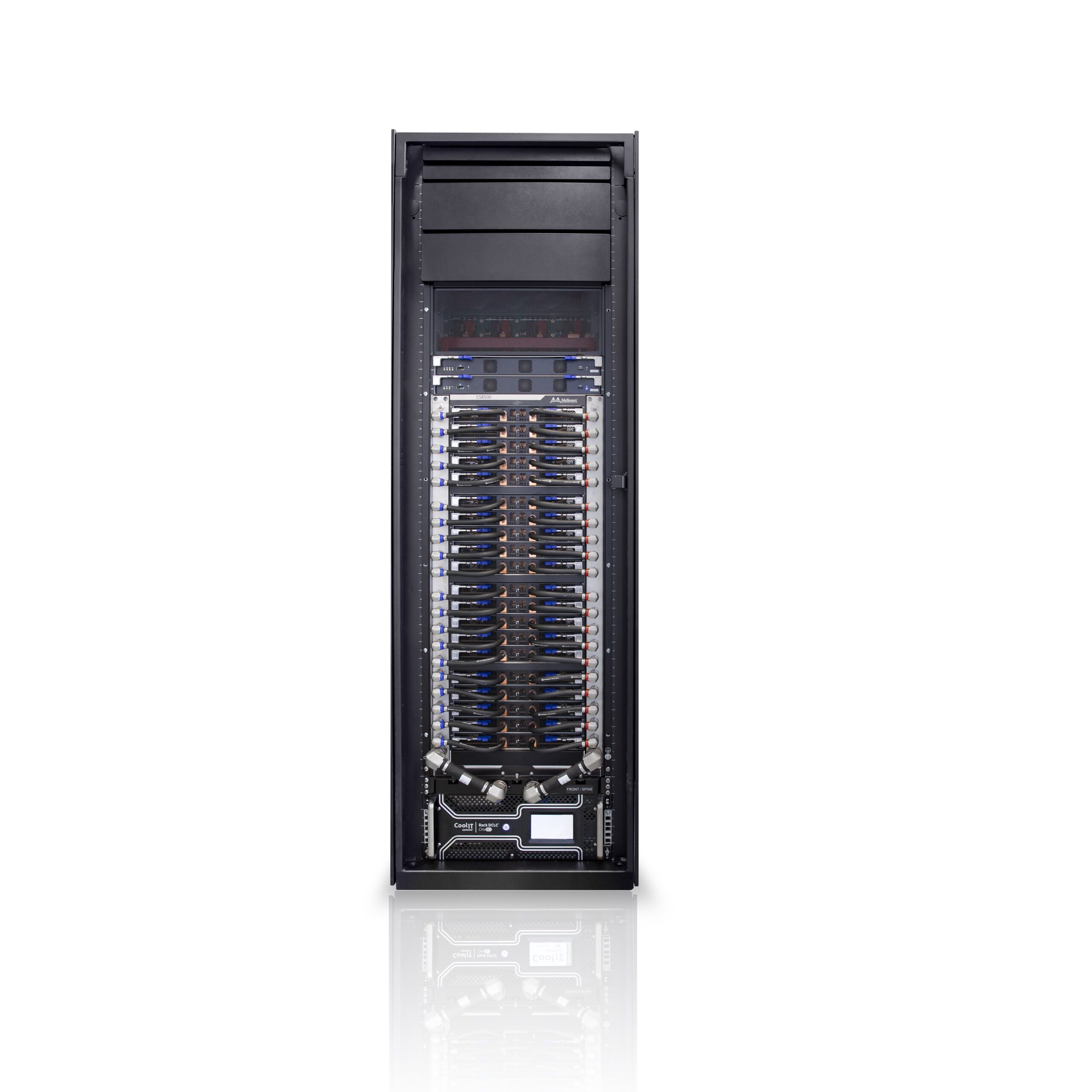
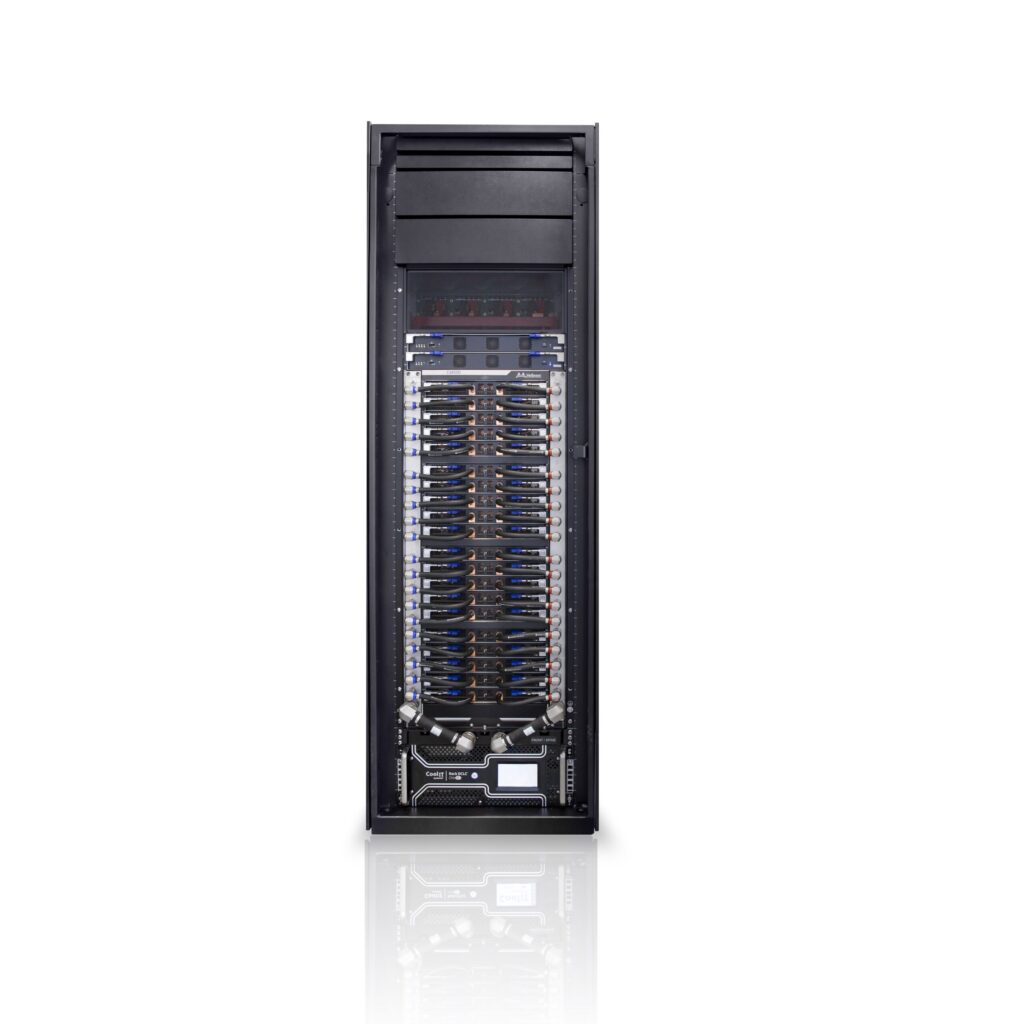
InfiniBand Switch – Ultra-High-Density 200GbE Connectivity for Future-Ready Data Centers
Introduction
The accelerating growth of real-time data processing, artificial intelligence (AI), high-performance computing (HPC), and mission-critical applications is reshaping modern data centers.
Organizations today require ultra-fast, reliable, and scalable interconnect solutions that not only meet today’s needs but are also future-proof.
The NVIDIA Quantum CS8500 InfiniBand Switch addresses these demands with unmatched capacity and speed.
Featuring up to 800 ports of 200Gb/s HDR InfiniBand connectivity, it provides exceptional performance, ultra-low latency, and advanced in-network computing capabilities.
This switch is engineered for organizations that require the highest levels of throughput, availability, and scalability in large-scale environments such as scientific research, AI model training, and cloud hyperscale deployments.
With support for up to 800 QSFP56 ports, the NVIDIA Quantum CS8500 delivers the highest port density in its class. This makes it ideal for:
By consolidating multiple smaller switches into a single large unit, organizations can reduce complexity and improve manageability while maximizing rack space utilization.
Each port on the CS8500 supports 200 gigabits per second (200Gb/s) of InfiniBand HDR (High Data Rate), ensuring ultra-fast data transfers. This enables:
The CS8500 delivers an impressive 320 Tb/s of full bidirectional bandwidth, allowing enormous amounts of data to flow through the network fabric without bottlenecks.
Whether managing large datasets, conducting research simulations, or running high-demand cloud applications, this switch ensures optimal application performance.
Designed with NVIDIA’s advanced silicon and InfiniBand technology, the CS8500 switch minimizes port-to-port latency down to microseconds.
Ultra-low latency is especially important for:
Despite its high capacity, the 29U rack-mountable form factor makes the CS8500 compact for large deployments.
It combines space efficiency with high throughput, allowing organizations to scale their networks vertically without expanding physical footprint unnecessarily.
The CS8500 supports NVIDIA SHARP™ (Scalable Hierarchical Aggregation and Reduction Protocol) technology.
By embedding computing tasks directly into the network fabric, SHARP offloads operations from CPUs and GPUs, accelerating data center workloads such as:
The CS8500 is built with enterprise-grade reliability in mind. Key availability features include:
These features ensure 24/7 uptime for mission-critical data center applications.
|
Specification |
Details |
|
Model Name |
NVIDIA Quantum CS8500 |
|
Data Rate |
200GbE HDR InfiniBand |
|
Number of Ports |
800 QSFP56 ports |
|
Total Bandwidth |
320 Tbps full bidirectional bandwidth |
|
Latency |
Ultra-low (microseconds range) |
|
Network Interface |
QSFP56 |
|
Form Factor |
29U Rack-Mountable |
|
In-Network Computing |
NVIDIA SHARP™ technology |
|
Power Supply |
Redundant, hot-swappable |
|
Cooling System |
Advanced airflow cooling system |
|
Management Software |
NVIDIA Quantum Management Suite |
|
Product SKU |
920-9B020-00FH-XD0 (MCS8500) |
|
SKU |
OPN |
Data Rate |
Network Interface |
Ports |
Technology |
|
920-9B020-00FH-XD0 |
MCS8500 |
HDR |
QSFP56 |
800 |
InfiniBand |
From weather modeling to quantum physics simulations, HPC environments demand extreme bandwidth and ultra-low latency.
The CS8500’s scale and speed make it a natural choice.
For training complex AI models, transferring huge datasets across GPU clusters can be a bottleneck.
The CS8500 ensures efficient data transfer between AI nodes without slowing down model training processes.
Cloud service providers hosting multi-tenant infrastructures require networking solutions that deliver performance at scale.
The CS8500 meets these needs with reliability, speed, and simplified management.
Lorem ipsum dolor sit amet, consectetur adipiscing elit. Ut elit tellus, luctus nec ullamcorper mattis, pulvinar dapibus leo.
The NVIDIA Quantum-X800 platform is the next generation of NVIDIA Quantum InfiniBand, purpose-built for trillion-parameter-scale AI models and comprised of the NVIDIA Quantum-X800 InfiniBand switch, NVIDIA ConnectX®-8 SuperNIC, and LinkX cables and transceivers.
The new platform supports advanced hardware-based, In-Network Computing with Scalable Hierarchical Aggregate Reduction Protocol (SHARP)™ v4, adaptive routing, and telemetry-based congestion control, enabling a new frontier of AI innovation.
The NVIDIA Quantum-X800 InfiniBand switch provides 144 ports of 800Gb/s connectivity per port. It includes hardware-based In-Network Computing with SHARP v4, adaptive routing, telemetry-based congestion control, performance isolation capabilities, and a dedicated port supporting the Unified Fabric Manager (UFM). NVIDIA Quantum-X800 switches also add advanced power-efficiency features, including low-power link state and power profiling.
The NVIDIA Quantum-X800 switch provides increased performance and power efficiency to significantly reduce scientific computing, AI workload completion time, and energy costs.
Quantum-X silicon photonics switches further reduce total power consumption and latency by minimizing the distance and number of connections between optics and electronics.
The NVIDIA ConnectX-8 SuperNIC delivers 800Gb/s connectivity with ultra-low latency and supports the latest in advanced In-Network Computing. Based on the ConnectX architecture, it continues to provide accelerated MPI hardware engines, quality of service, adaptive routing, congestion control, and more.
The NVIDIA Quantum-X800 platform connectivity options with the NVIDIA LinkX® interconnect portfolio provide the maximum flexibility for building a preferred network topology, using connectorized transceivers with passive fiber cables and linear active copper cables (LACCs).
Your email address will not be published. Required fields are marked *