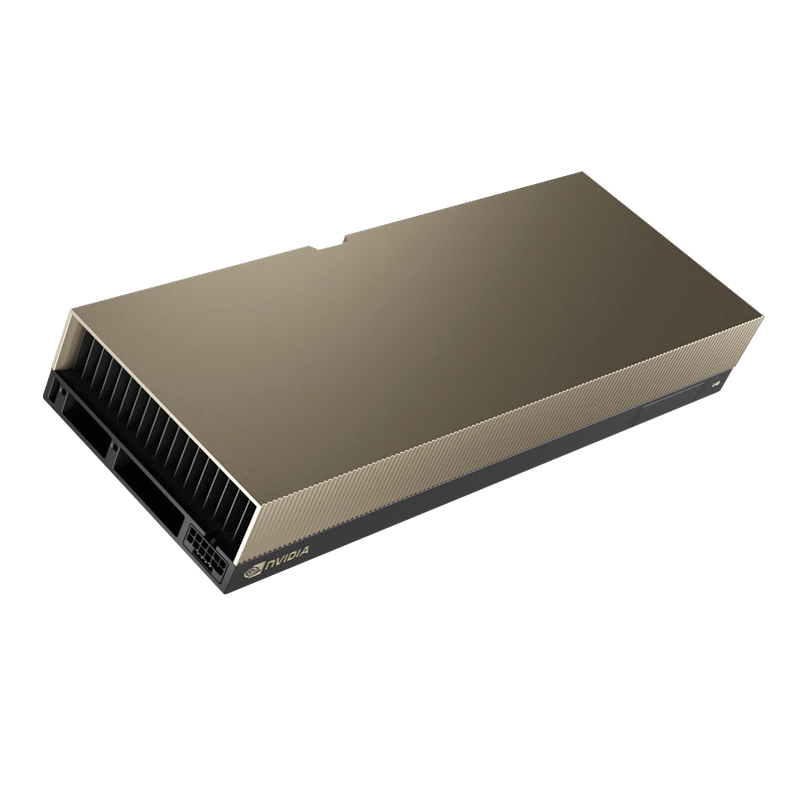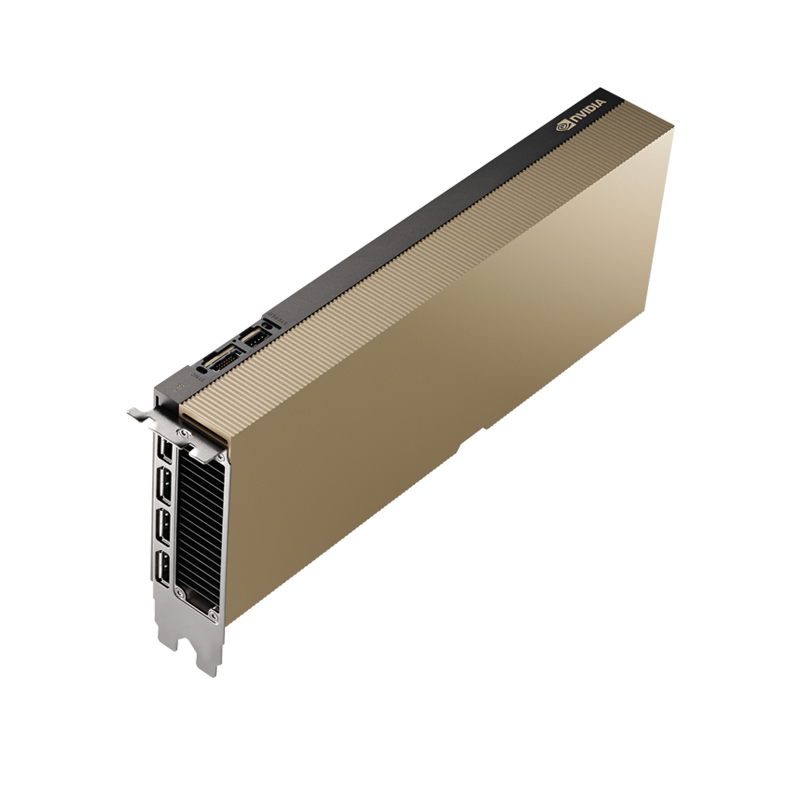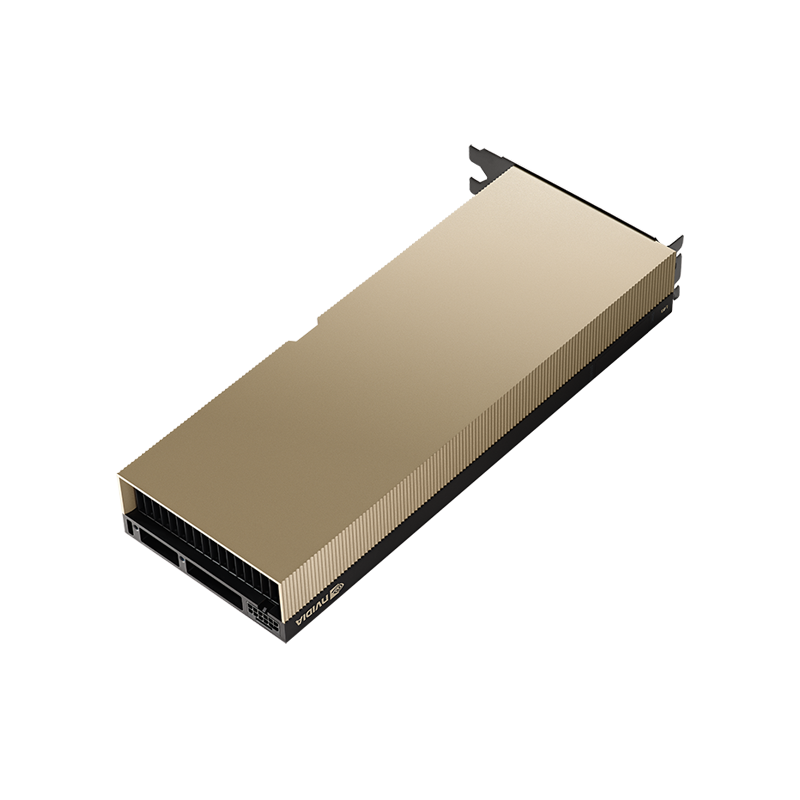
18,176 CUDA cores and 48GB ECC GDDR6 memory for extreme performance
Advanced 4th-gen Tensor Cores with FP8 support for AI acceleration
3rd-gen RT Cores for real-time, photorealistic ray tracing
Ideal for Omniverse, digital twins, simulation, and content creation
Up to 864 GB/s memory bandwidth for seamless data handling
Hardware AV1 encoding/decoding and 6 total video engines (3 NVENC + 3 NVDEC)
Full GPU virtualization with NVIDIA vGPU software support
NEBS Level 3 compliant, passive cooling, and 300W max power draw
Compatible with major enterprise servers and software ecosystems
As visual computing, artificial intelligence (AI), and simulation workloads become increasingly complex and resource-intensive, enterprises demand robust, versatile, and scalable GPU solutions that can handle massive data volumes and computational needs without compromise. Enter the NVIDIA L40 a cutting-edge GPU built on the powerful Ada Lovelace architecture, engineered to deliver next-generation performance for graphics, compute, AI, and data center operations.
Whether powering immersive virtual environments, managing large-scale simulation models, or driving deep learning workloads, the NVIDIA L40 redefines what’s possible in a GPU-accelerated data center. With unmatched ray tracing, AI inferencing power, and exceptional virtualization capabilities, the L40 meets and exceeds the demands of modern enterprise infrastructure.
At the heart of the NVIDIA L40 lies the Ada Lovelace architecture — a significant leap in GPU design. Built using a 4nm custom NVIDIA process by TSMC, the L40 integrates 76.3 billion transistors across a 608.44 mm² die, representing one of the most sophisticated chip designs in the world.
Ada Lovelace delivers improvements across every dimension, including ray tracing, AI acceleration, compute power, and energy efficiency. It introduces new levels of concurrency, lower latency, and enhanced throughput — enabling the NVIDIA L40 to outperform its predecessors in every metric.
The L40 is purpose-built for high-performance data center applications. It is equipped with:
These specifications enable the GPU to handle massive workloads, from 3D rendering and real-time collaboration to AI model training and video encoding.
The high-bandwidth memory and advanced cores empower professionals to create, simulate, and deploy large-scale projects, digital twins, and immersive experiences without bottlenecks.
Visual fidelity is more crucial than ever in industries such as media and entertainment, architecture, product design, and scientific visualization. The NVIDIA L40 delivers up to 2x the real-time ray tracing performance of previous-generation GPUs, enabling photorealistic rendering at interactive frame rates.
Thanks to its third-generation RT Cores and massive GDDR6 memory, the L40 supports high-resolution texture mapping, complex lighting effects, and detailed geometry processing — ideal for applications like:
This makes the L40 an essential tool for creative professionals working with high-performance visualization tools like Autodesk, Unreal Engine, and Blender.
The NVIDIA L40 is a powerhouse for AI workloads. Its fourth-generation Tensor Cores now support the FP8 precision format, dramatically increasing throughput for inferencing and training. Combined with structural sparsity, which enables the network to ignore insignificant weights, the L40 can achieve up to 2x performance improvements in sparse AI models.
These capabilities make it ideal for a wide range of compute-intensive applications such as:
Furthermore, the L40 supports every major deep learning framework, including TensorFlow, PyTorch, and MXNet, and integrates seamlessly with over 700 GPU-accelerated HPC applications.
One of the most compelling features of the NVIDIA L40 is its support for GPU virtualization. With compatibility for NVIDIA vApps, vPC, and RTX Virtual Workstation (vWS), the L40 enables virtualized desktops and applications that maintain full GPU acceleration even across multiple users and sessions.
This makes it suitable for enterprise environments seeking to:
The L40 supports multiple vGPU profiles from 1 GB up to 48 GB allowing administrators to optimize resource allocation per user or workload.
The NVIDIA L40 is a foundational component of NVIDIA Omniverse Enterprise, the platform for real-time collaboration, simulation, and digital twin creation. With this GPU, users can:
By combining RTX graphics with AI acceleration, the L40 enables Omniverse users to generate synthetic data, simulate physics with accuracy, and render scenes in stunning realism all in real time.
For professionals who require consistent, high-speed access to performance-intensive applications, the L40 (when paired with RTX Virtual Workstation software) enables powerful virtual workstations hosted in the cloud or on-premises. These workstations rival the performance of physical desktops, while providing:
Ideal for design, engineering, content creation, and financial modeling, virtual workstations with the L40 reduce infrastructure complexity and cost while maintaining top-tier performance.
Streaming, encoding, and video analytics are becoming critical to industries ranging from broadcasting to surveillance and telehealth. The NVIDIA L40 includes:
These capabilities improve throughput, reduce latency, and enhance visual quality all while lowering total cost of ownership. Whether you’re streaming 4K video, performing video analysis, or managing cloud gaming workloads, the L40 ensures unmatched video performance.
Designed for continuous operation in enterprise environments, the L40 is built with:
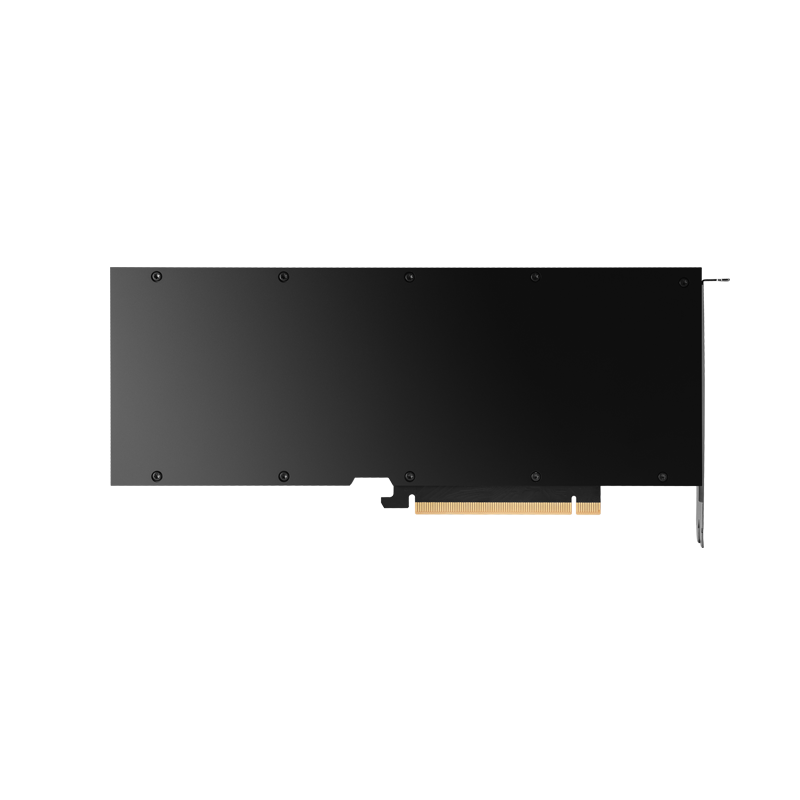
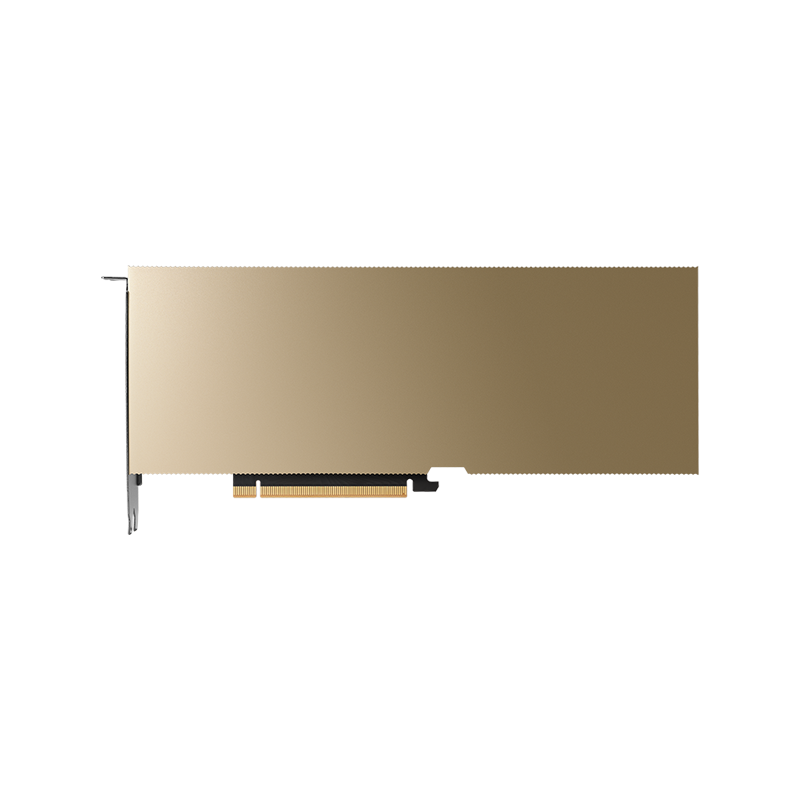
Its dual-slot form factor (4.4″ H x 10.5″ L) fits standard server configurations, and it is certified across leading OEM platforms. Administrators can deploy the L40 across data centers at scale, with confidence in its reliability and security.
The NVIDIA L40 supports a comprehensive array of software platforms and APIs, making it highly compatible across industries:
These tools ensure full compatibility with enterprise software stacks, scientific computing environments, and content creation platforms.
| Feature | Specification |
| Architecture | Ada Lovelace |
| Process Technology | 4nm TSMC |
| CUDA Cores | 18,176 |
| Tensor Cores (Gen 4) | 568 |
| RT Cores (Gen 3) | 142 |
| GPU Memory | 48 GB GDDR6 ECC |
| Memory Interface | 384-bit |
| Memory Bandwidth | 864 GB/s |
| Max Power Consumption | 300 W |
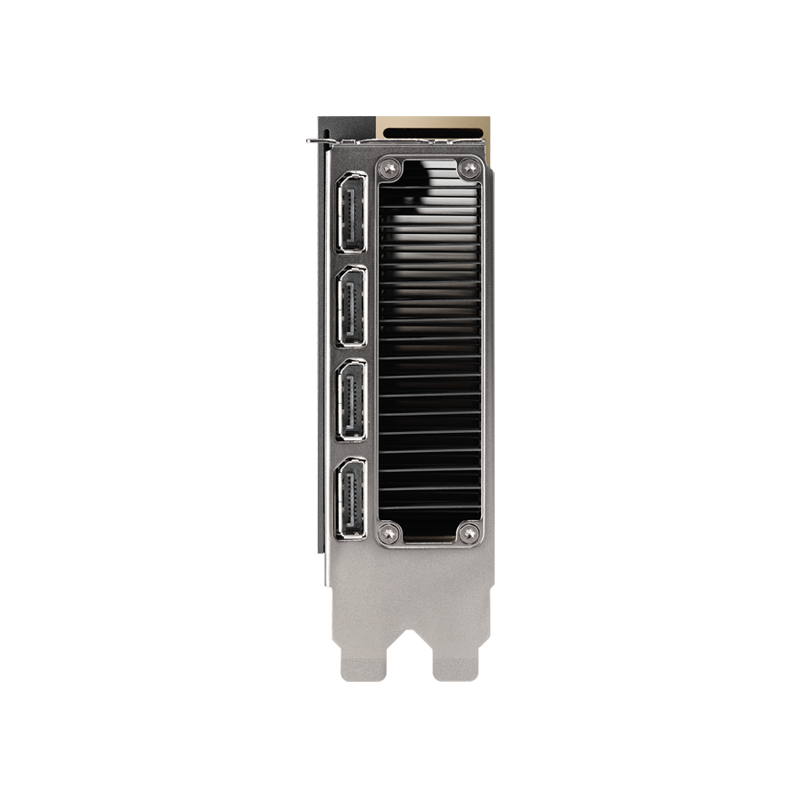
| Display Outputs | 4x DisplayPort 1.4a |
| Max Digital Resolution | Up to 8K @ 60Hz, 4K @ 120Hz |
| Virtualization Profiles | 1 GB to 48 GB |
| NVENC / NVDEC | 3x each |
| Form Factor | Dual Slot (4.4″ H x 10.5″ L) |
| Thermal Solution | Passive |
| APIs | DirectX, Vulkan, OpenGL, CUDA, OpenCL |
The NVIDIA L40 represents the convergence of cutting-edge graphics, AI acceleration, virtualization, and data center readiness all in one powerful GPU. Built for enterprises navigating an ever-evolving digital landscape, the L40 empowers professionals, developers, and researchers to push boundaries in rendering, training, simulation, and more.
Its versatility across workloads, from 3D design to deep learning, combined with unmatched performance and reliability, makes the L40 a cornerstone of the modern GPU-powered data center.
Lorem ipsum dolor sit amet, consectetur adipiscing elit. Ut elit tellus, luctus nec ullamcorper mattis, pulvinar dapibus leo.
The NVIDIA Quantum-X800 platform is the next generation of NVIDIA Quantum InfiniBand, purpose-built for trillion-parameter-scale AI models and comprised of the NVIDIA Quantum-X800 InfiniBand switch, NVIDIA ConnectX®-8 SuperNIC, and LinkX cables and transceivers.
The new platform supports advanced hardware-based, In-Network Computing with Scalable Hierarchical Aggregate Reduction Protocol (SHARP)™ v4, adaptive routing, and telemetry-based congestion control, enabling a new frontier of AI innovation.
The NVIDIA Quantum-X800 InfiniBand switch provides 144 ports of 800Gb/s connectivity per port. It includes hardware-based In-Network Computing with SHARP v4, adaptive routing, telemetry-based congestion control, performance isolation capabilities, and a dedicated port supporting the Unified Fabric Manager (UFM). NVIDIA Quantum-X800 switches also add advanced power-efficiency features, including low-power link state and power profiling.
The NVIDIA Quantum-X800 switch provides increased performance and power efficiency to significantly reduce scientific computing, AI workload completion time, and energy costs.
Quantum-X silicon photonics switches further reduce total power consumption and latency by minimizing the distance and number of connections between optics and electronics.
The NVIDIA ConnectX-8 SuperNIC delivers 800Gb/s connectivity with ultra-low latency and supports the latest in advanced In-Network Computing. Based on the ConnectX architecture, it continues to provide accelerated MPI hardware engines, quality of service, adaptive routing, congestion control, and more.
The NVIDIA Quantum-X800 platform connectivity options with the NVIDIA LinkX® interconnect portfolio provide the maximum flexibility for building a preferred network topology, using connectorized transceivers with passive fiber cables and linear active copper cables (LACCs).
Your email address will not be published. Required fields are marked *